


This article is going to be a deep dive into my royalty earnings over the last 15 years of producing music for libraries, TV, ads and trailers.
No hiding anything.
Busting Myths & Breaking the Mould
Production music is not passive income. It is income that is asynchronous to your action. You work hard for free, then 2 years later you get paid.
People also talk alot about income made through royalties but often don't show actual numbers. In the world of production music is a lack of transparency. I don't think people talk about income from production music enough.
I mean, I get it.
I find it embarrassing to discuss how much I got paid for things.
Maybe because I am British or maybe just because I don't like to seem like I am gloating.
However, I have decided to be as transparent.
Completely transparent.
In the hope that it might help inspire you to pursue production music (and composing music in general) and at the very least, help you better understand production music and all the ways you can earn money from your music.
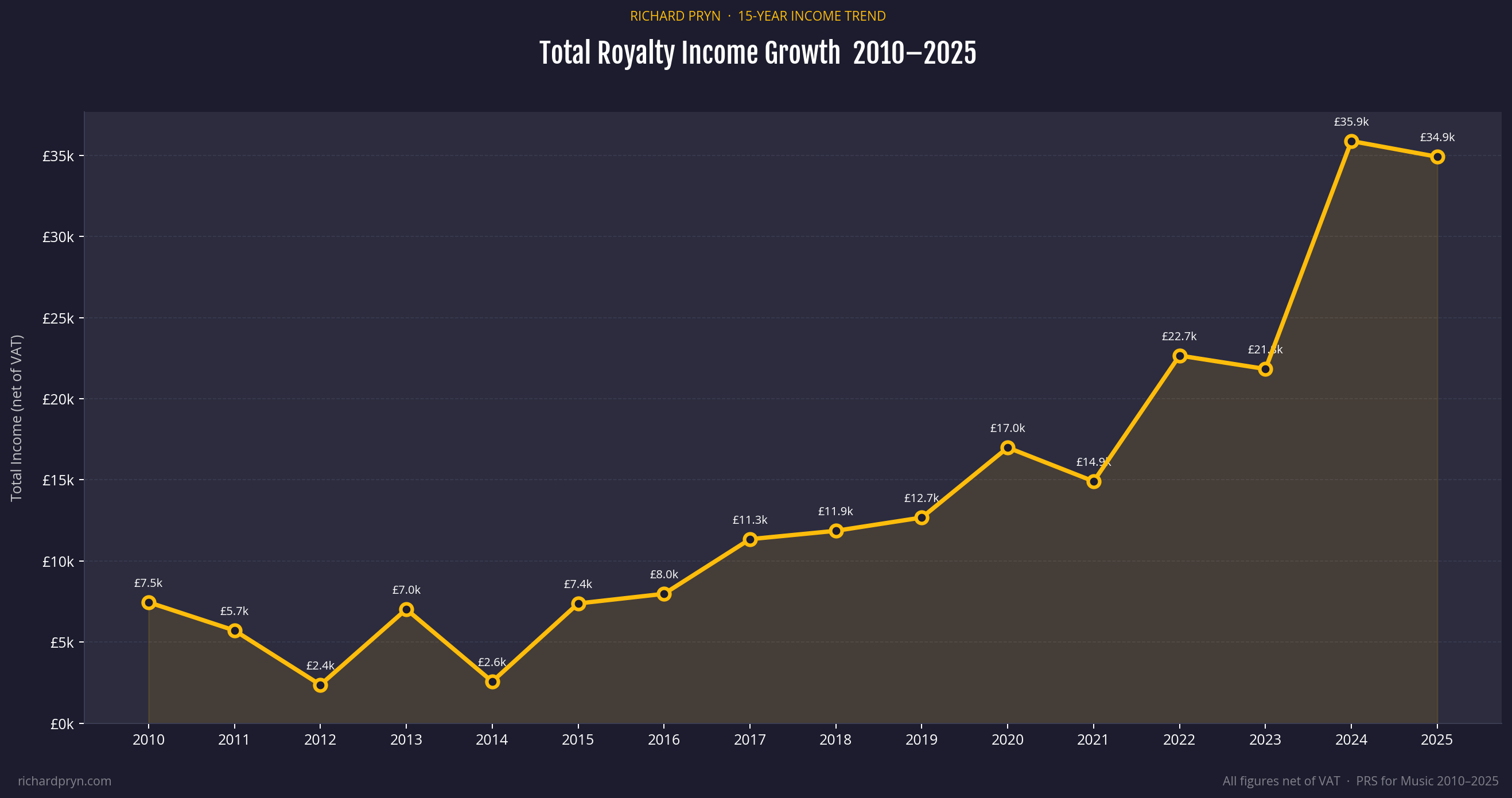
I want to show you a line chart of my PRS/MCPS (PRO) income over the last 15 years. I will go into more detailed with this later on but I wanted to give you my numbers straight off the bat.
The Reality of Earning Money from Production Music
Building an income from production music is like growing a savings account. Neither will make you rich overnight because the real magic is in consistency and compounding.
Doing the same thing over and over. Like building a Lego model except instead of little plastic bricks you are building something with pieces of music.
I want just add something here. I hate the word consistency. When I hear that I think of all the content creators saying "one track a week", "one short per day". That annoys me.
I prefer to view consistency like walking, one step at a time. Not a daily or weekly obligation.
For us composers, that means moving from one project to another. Some projects take longer than others but the key part is one project to the next.
Rant over. *
Slowly over time that collection of tracks you have produced and published forms a back catalogue of music that brings in royalties and sync fees.
Sometimes you get a windfall when a track gets a lot of plays or lands a big sync placement.
Other times it is the catalogue as a whole bringing in pennies per track but when they are all combined it makes a solid paycheck.
This is what you are seeing here.
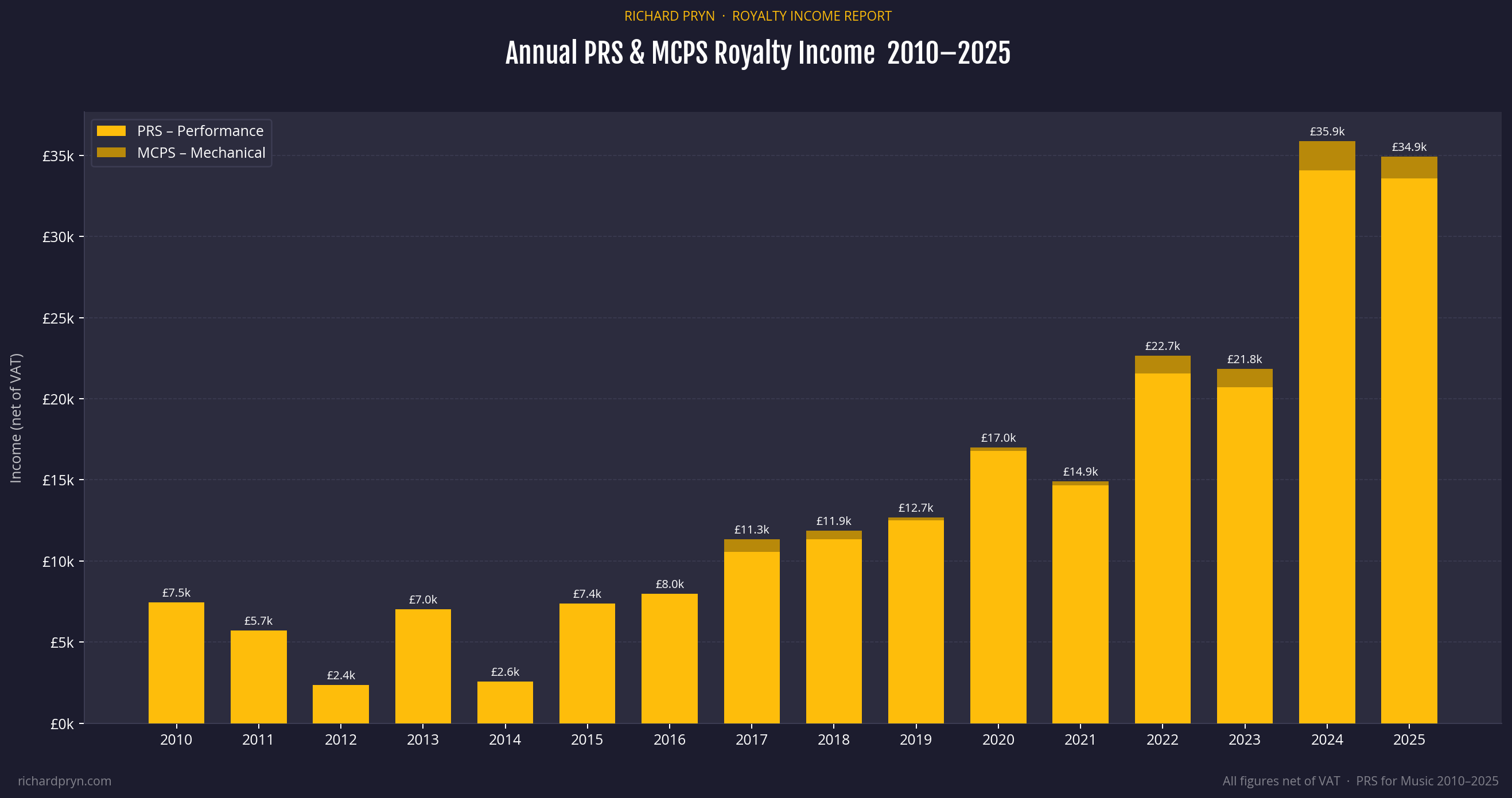
I had some big placements 2010-2013 but it wasn't until around 2017 that my back catalogue started earning money as a whole. Before that it was just a couple of tracks.
But, consistency is hard.
Consistency with very little pay is fucking hard!
This is where many composers get left by the wayside because they have put a solid year (maybe more) and they have very little to show for it.
I want to remind you that I started in 2007 and went full time end of 2013. That's almost 7 years of doing this on the side.
7 years!
Please remember that number when you are feeling disheartened. I am not saying that you will take that long, but it might. And if you really want it it, like REALLY want it then this will keep your drive going.
Having put my time in now. Almost 20 years later from when I started.
I can look back at those years of seemingly unpaid work and feel very grateful to my past self for putting in that time then as I am reaping the rewards now.
How production music actually works
Here it is in a nutshell:
You write → library signs → library licenses to brands → You get paid
This is the same whether you are writing custom for ads, production music albums, trailer music etc.
All of my work has come through that route.
(With the exception of the odd custom job but they have been few and far between.)
Each of the steps in that chain have their own things to look out for and understand of course:
- You write → well that's simple right? Wrong. You need to make sure you know what music will get placements and who to pitch it to.
- Library signs → As long as you hit the brief and deliver quality music.
- Library licenses to brands → Not all libraries are made equal I'm afraid and most of the time you don't find this out until you have written for a few of them.
- You get paid → This is why you make sure your tracks are registered with your PRO!
👉🏻 My free production music guide goes into more detail on all of this.
What are your possible income streams
These are your main income streams:
- Sync fees - The upfront payment for the right to synchronise your music to a moving image (TV show, ad, film, online video). Paid at the point of licensing.
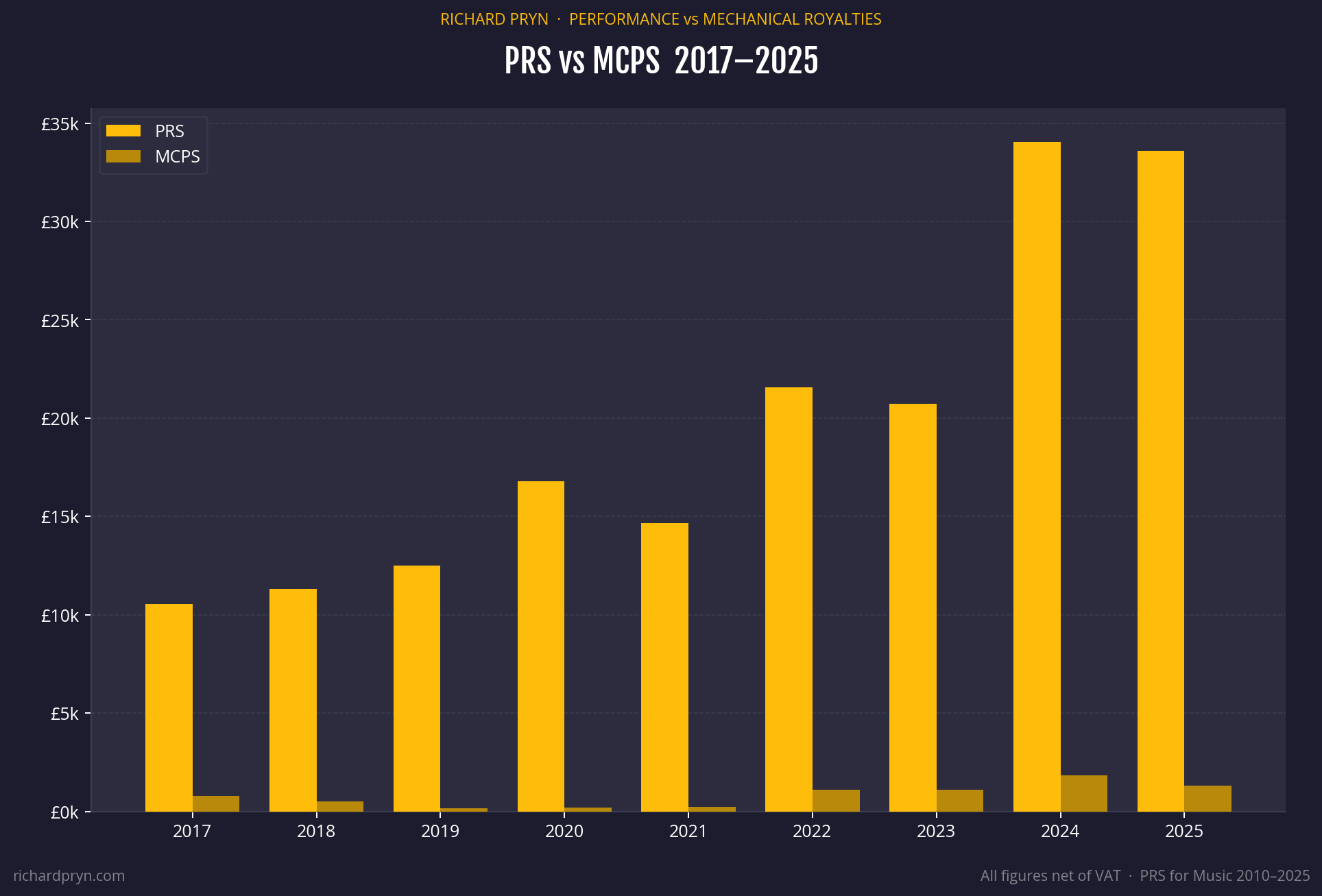
- Royalties - The ongoing payments generated every time the licensed content is actually used/broadcast. Unlike sync fees, these compound over time. These are split into performance royalties and mechanical royalties.
👉🏻 Just for reference here is a comparison of my performance and mechanical royalty income over the years:
- Composer Fees - The payment for your services to compose music (non-recoupable). This includes demo fees.
- Recoupable Advances - Money given to you in advance to compose music that is given to you before you produce the music that the library then recoups from your royalties.
- Streaming - This is actually mechanical royalties but I wanted to put it here in case you were wondering.
- YouTube Revenue - your share of the advertising revenue on any videos that contain your music.
Here's a simple little diagram to illustrate the basics:
Track licensed to TV ad
│
├── Sync fee ──────────────► Paid immediately by the buyer
│ Split with your library
│
└── Ad airs on TV/online ──► PRO collects performance royalties
↓
PRS pays you quarterly (backend) - Keeps paying as long as it airs
Deep Dive Into My Highest Earning Tracks
Here are my highest earning tracks from the last 15 years.
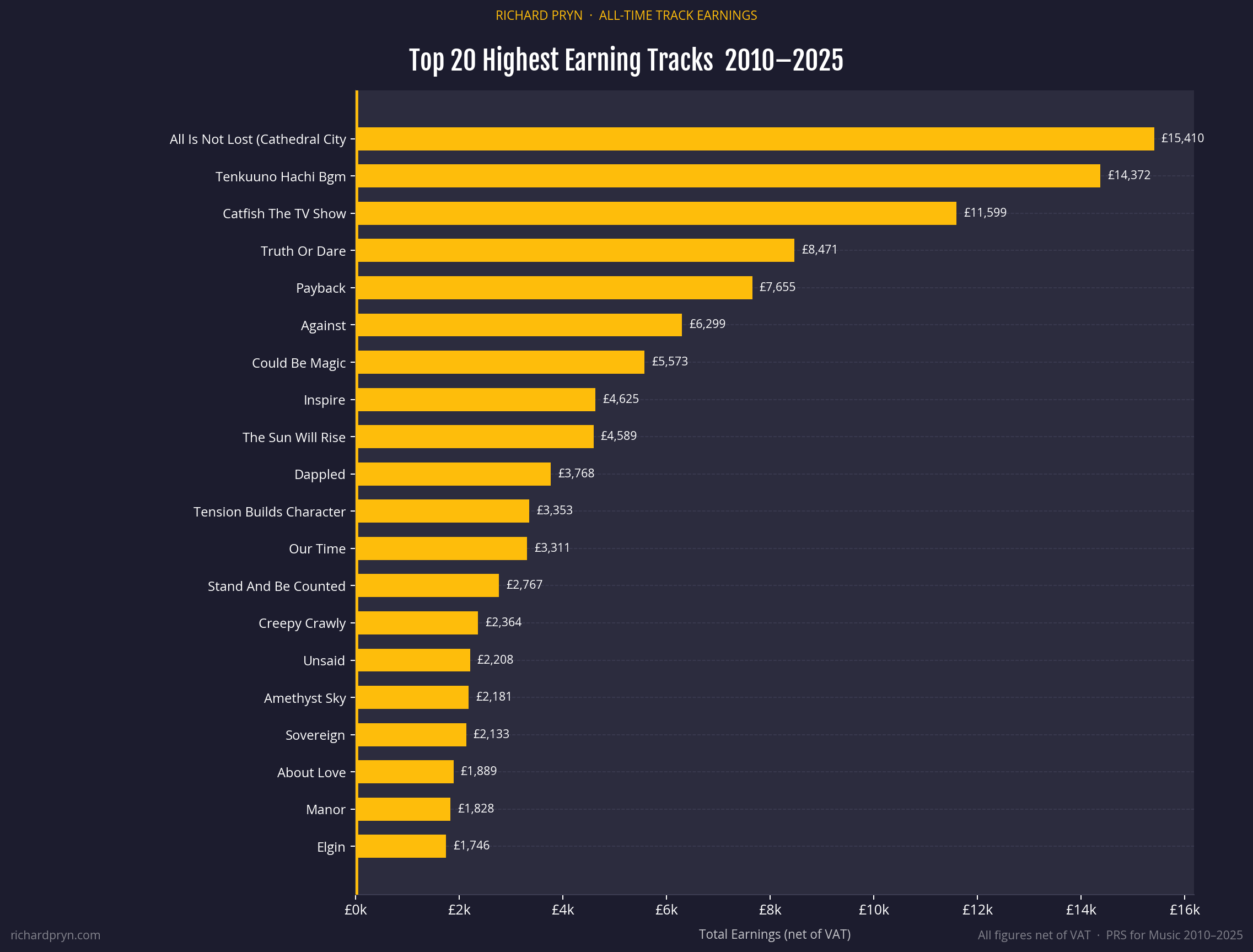
I want to give you a little backstory and more detail on the top 10 highest earners for me.
The reason I want to break these down is because they give a lot of context to what I am talking about.
No.1 - All Is Not Lost - Cathedral City TV advert
This was my first BIG placement back in 2010 and it account for the first few years of my royalties (2010-2013) being very high.
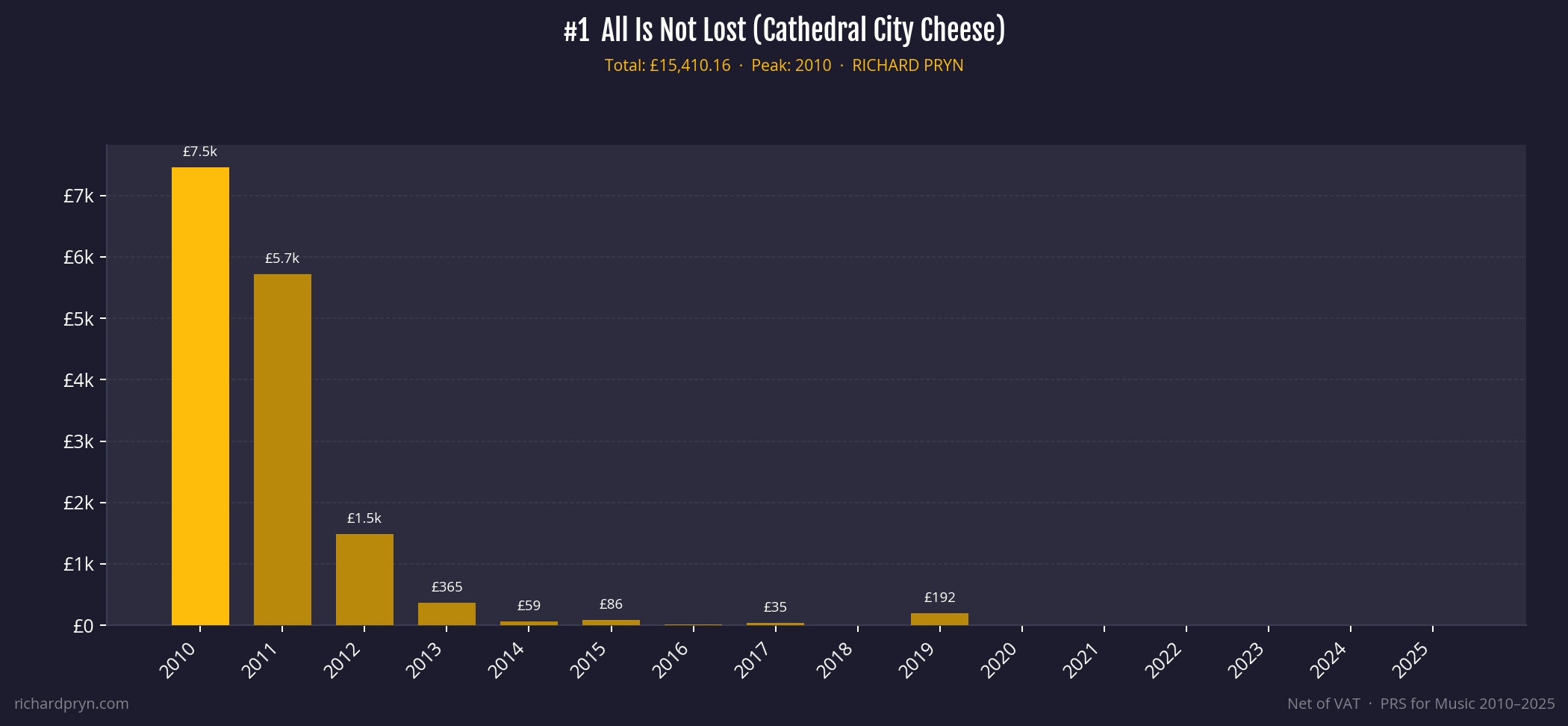
This was a custom scoring job when I used to work as a bespoke composer for Boosey & Hawkes / Imagem (acquired by Concord in 2017). It was an old track of mine that I reworked for the advert.
This Cathedral City advert was still running on Channel 5 USA years after the UK campaign, and continues generating royalties across multiple ad campaigns.
No.2 - Tenku No Hachi OST
I got this job whilst I was writing for Imagem because they had just started pitching us bespoke composers for film jobs.
I didn't score the trailer FYI
I started work on the score in 2013 and the film released in 2015.
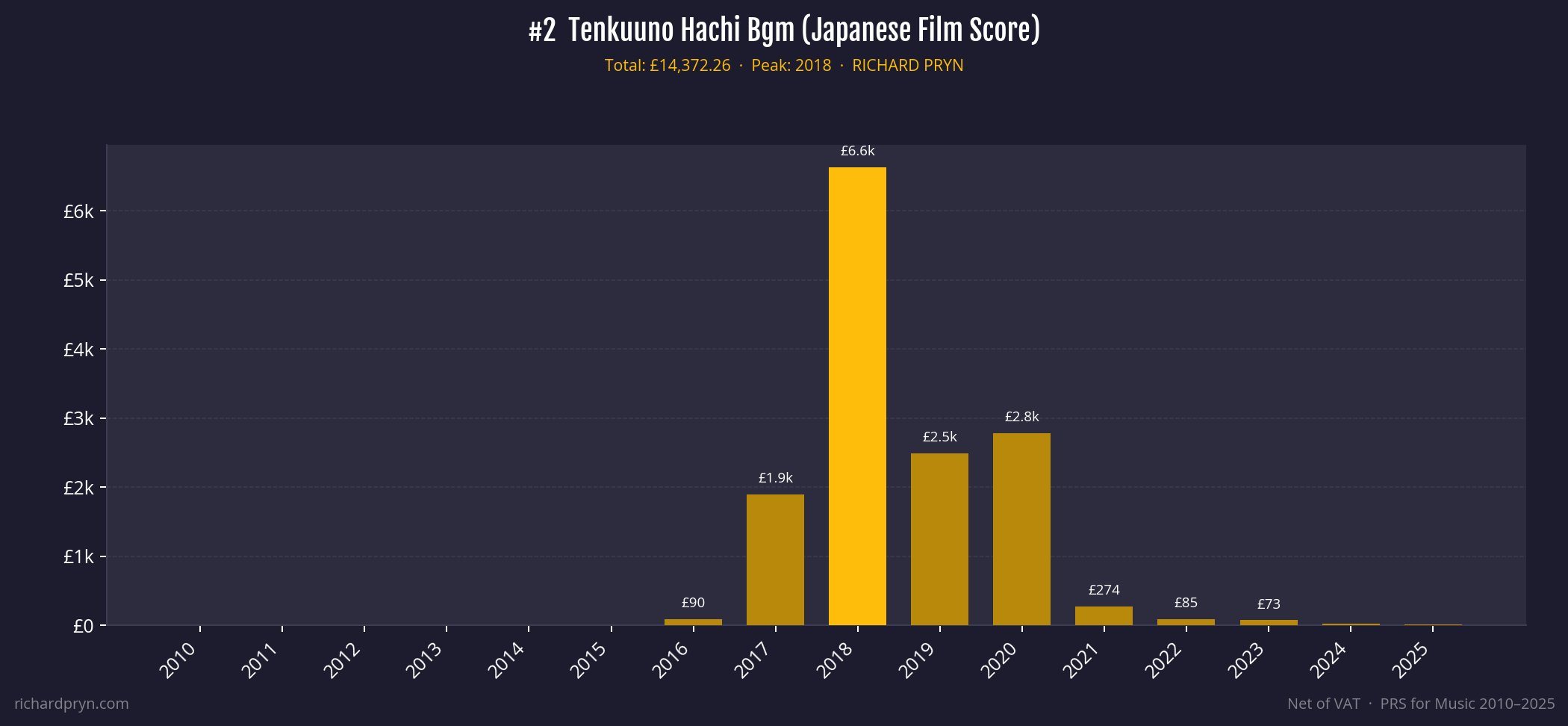
As you can see the royalties didn't really start coming in for 2 whole years.
Although this was a HUGE deal for me it shows a valuable lesson in earning money from composing music.
This is 100% Japanese JASRAC income from a Japanese film/production. A single project in an obscure Japanese market earning over £14k is a perfect example of how production music reaches places you'd never expect.
(I also received about £3k for my services as a composer to score the movie)
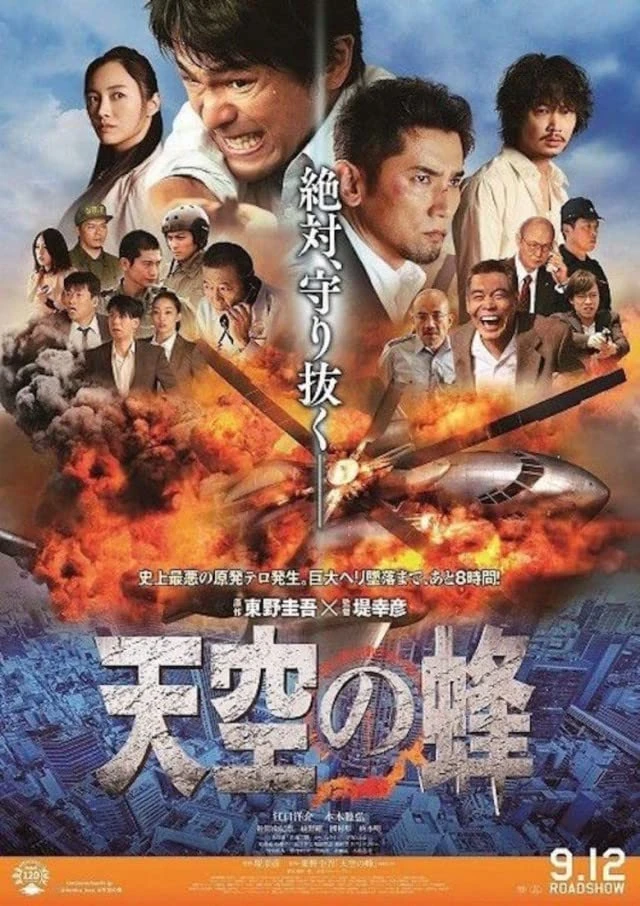
This whole album was mixed and mastered by my good friend Taz Mattar who also produced an amazing mixing and mastering masterclass for my course Hybrid Trailer Music which you can get inside The Composer Academy
No.3 - Catfish: The TV Show
Back in 2011, a friend of mine named Vikram Gudi was starting his own trailer music library called Elephant Music and asked if I could produce an album of piano music for this new venture.
A few weeks later I gave him the links to 5 albums of solo piano music. We called it (imaginatively) Piano Works 1-5.
Each album was aiming at slightly different moods.
Vik then handed it to a contact he had who was supervising a new MTV production called Catfish. He gave them free reign to use any and all of that music.
This is what happened:
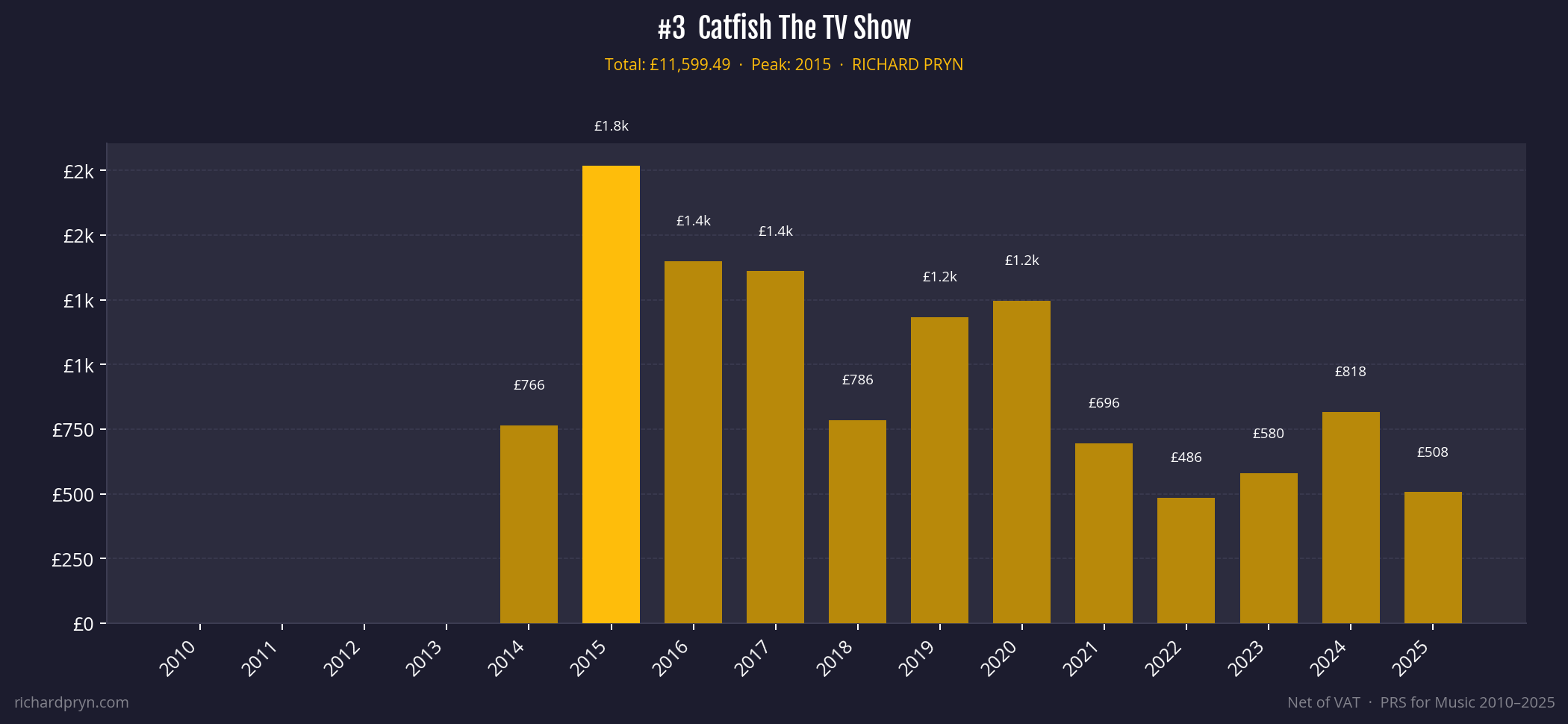
It is still earning in 2025 from placements first made in 2014. Eleven years of royalties from one project. I haven't written a note of it in over a decade but it keeps on paying.
You can hear the third instalment of Piano Works here just to get a feel for it.
No.4 - Truth of Dare OST
This was another scoring job I landed when I was writing for Imagem. It was my first foray into feature film scoring and also into horror music. It was also my first job scoring a trailer.
With this job I was not paid upfront, I agreed to accept my fee as royalty payments. (It was a low budget job and music is often one of the first places where budgets get slashed).
I started work on this score in 2011 with the film being released in 2012. As you can see from the chart below, I did not see any money from the release until 2016.
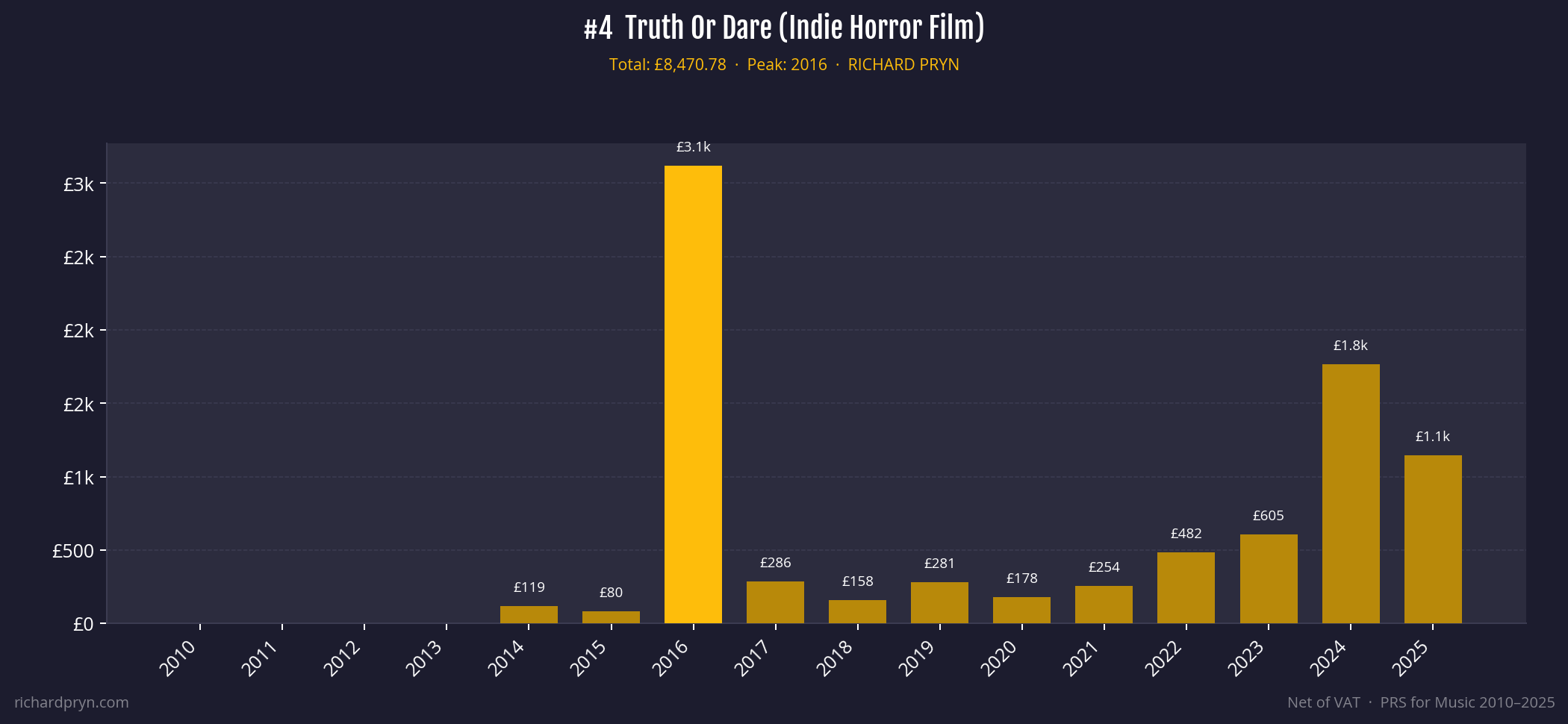
Then what starts to happen is that wonderful thing that backend royalties tend to do, which is compound.
I would assume that this is because the film got added to various streaming sites but I am not really sure.
I am not complaining either 😆
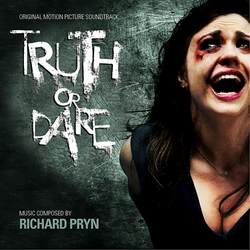
This is my favourite track from the soundtrack - roll on the credits ⤵️
No.5 - Payback - Library track
This is my highest earning library track. It was composed for a library called Anger Music. Taken from the album Themes from Dark City.
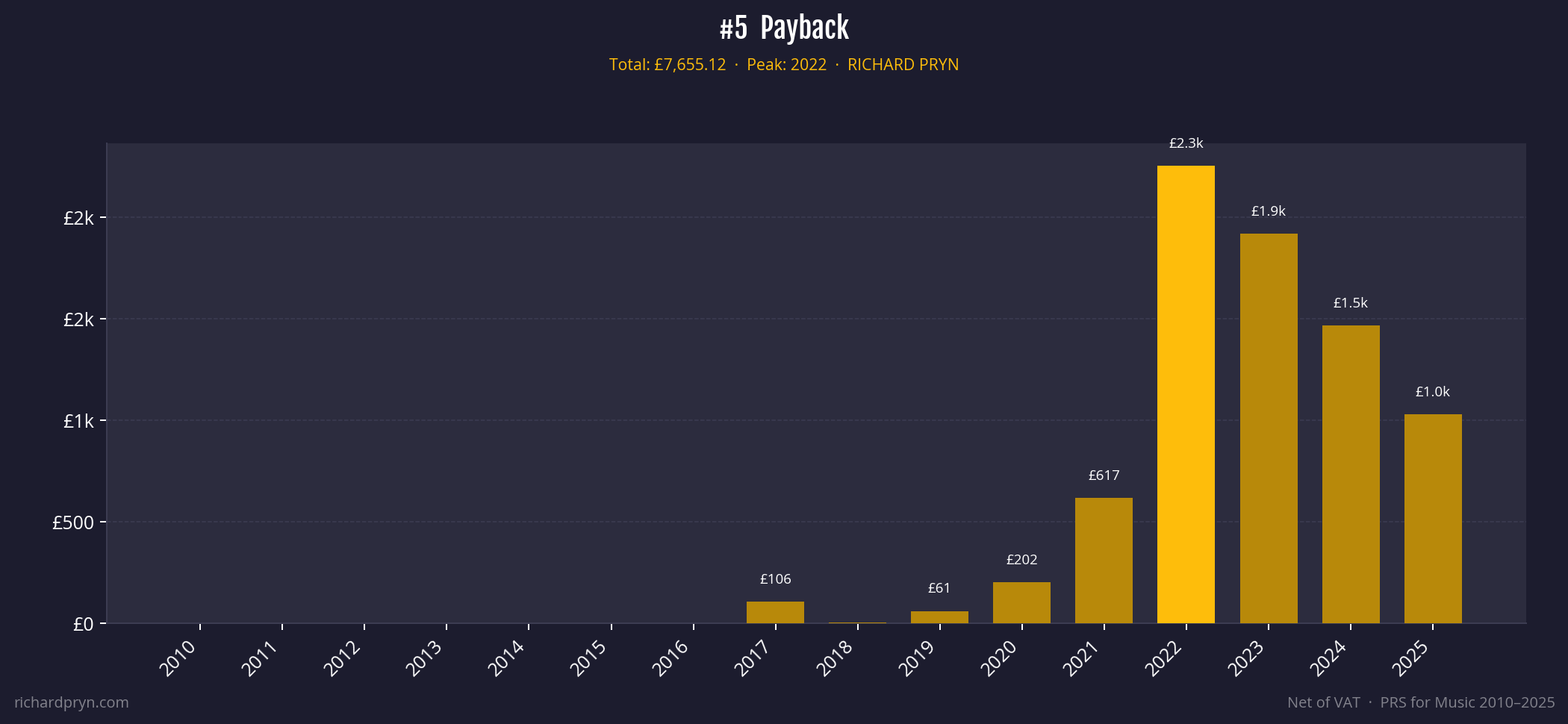
The numbers you see here are almost entirely from earnings through the TV show Aussie Gold Hunters across Australian and French Discovery channels.
I really enjoyed composing this album. It was the first album where I had access to decent sample libraries (East West Hollywood Orchestra) and I had a lot of fun finally getting that big Hollywood sound from the comfort of my own home.
No.6 - Against - Elephant Music
Hey, this is the highest royalty earner of all of my trailer music.
This track was composed as part of a 2-album series of drum only trailer tracks made for 1st and 2nd acts of action trailers.
Here are it's earnings:
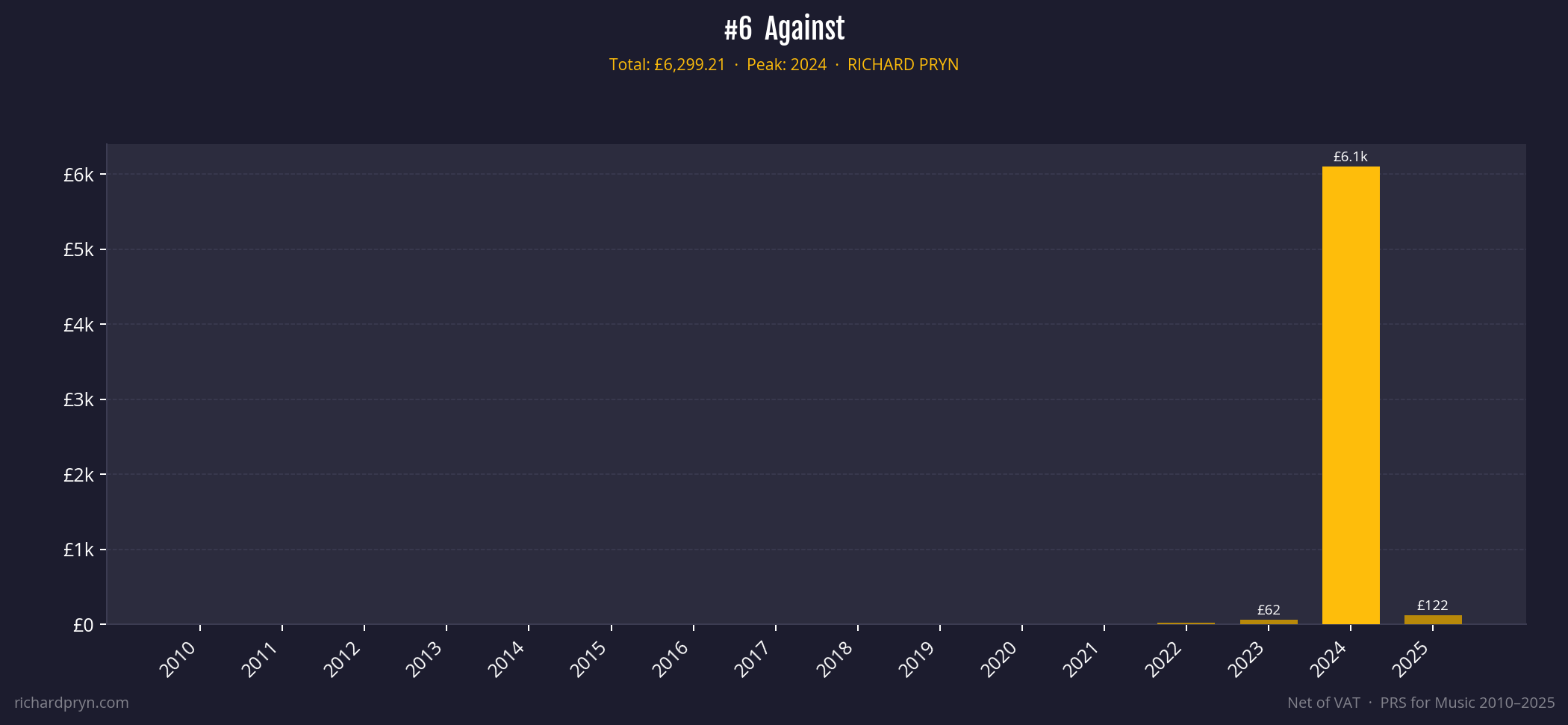
Dormant for two years, then a single French TV placement on TF1 generates £6,097 in 12 months. That's the whole "why you keep submitting" argument in one data point.
You never know when one of your tracks might land something big.
I also really like this as an example of the idea that, you never know which of your tracks will land. From the album, this was one of my least favourites and I would maybe even say it's a tad boring.
But at the end of the day, it served a purpose and that is the most important aspect of what we do here. Deliver the correct mood/vibe.
No.7 - Could Be Magic - National Lottery TV advert (custom)
Yet another custom job for an TV advert. Which is why I pursued writing for TV ads for so many years before moving properly into production music and trailer music.
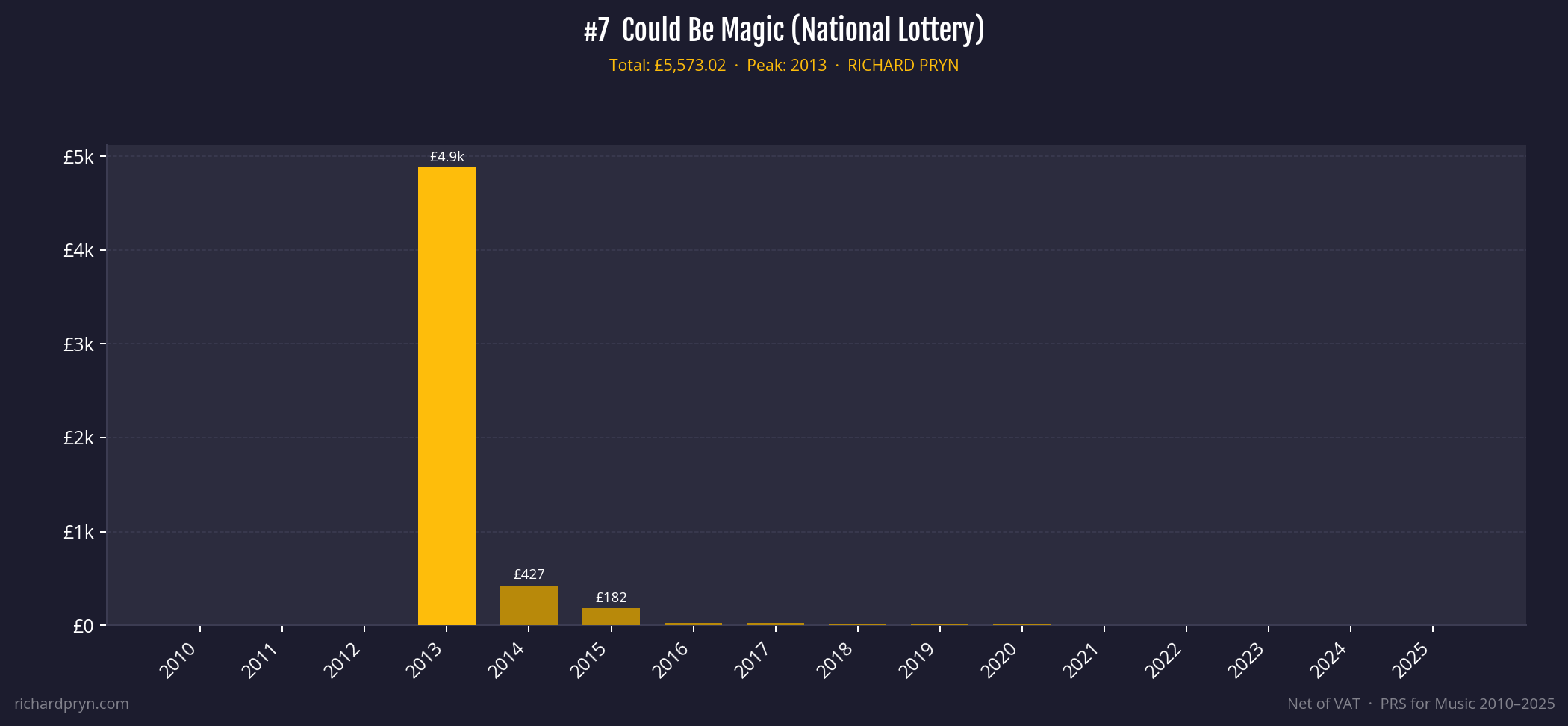
The lesson here is that ads pay well up front and in royalties, which is why they are so very competitive.
I produced around 35 variations of this track until I finally won the pitch.
No.8 - Inspire (Custom Ad Campaign)
This was a global brand campaign for Unilever.
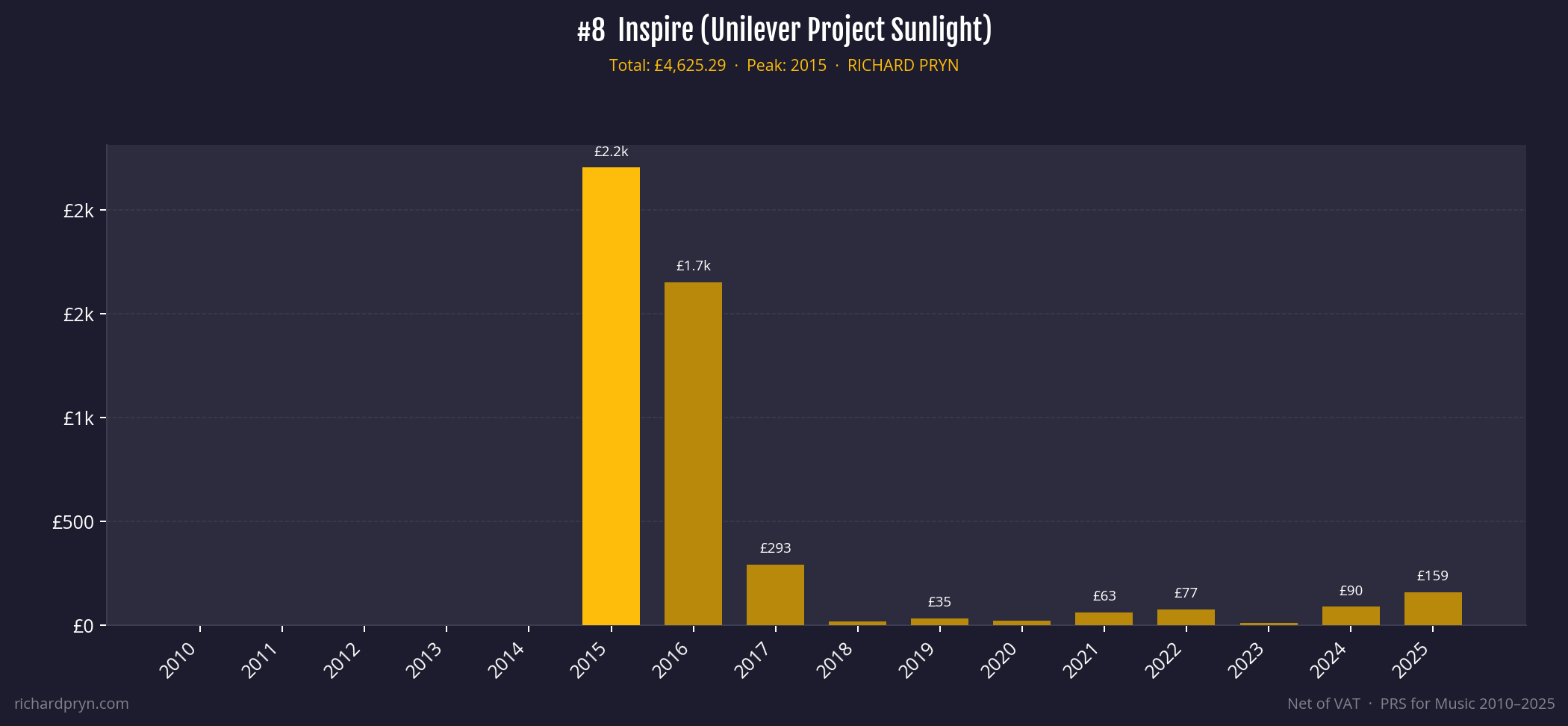
What this image is not showing you is the sync fee. This was a global brand campaign so wasn't ever going to be huge TV royalties but the sync fee was the biggest I have ever had. It was £48,000 (after the publisher took their cut!)
I distinctly remember dancing around the kitchen with my wife and then 1 year old celebrating that we basically won the lottery.
This felt like that "big break" everyone always talks about.
It was also endless revisions (at all hours), calls with the ad agency creatives in London, New York and Rio (sounds way more glamorous than it was), back and forths, countless variations and cutdowns etc.
In hindsight it was not that much work but it felt incredibly stressful.
But TOTALLY worth it!
Here's one of the ads:
No.9 - The Sun Will Rise - Elephant Music Trailer cue
This is probably one of my favourite tracks I have ever written.
It has been used on a few trailers, the most notable was Disney's Pete's Dragon.
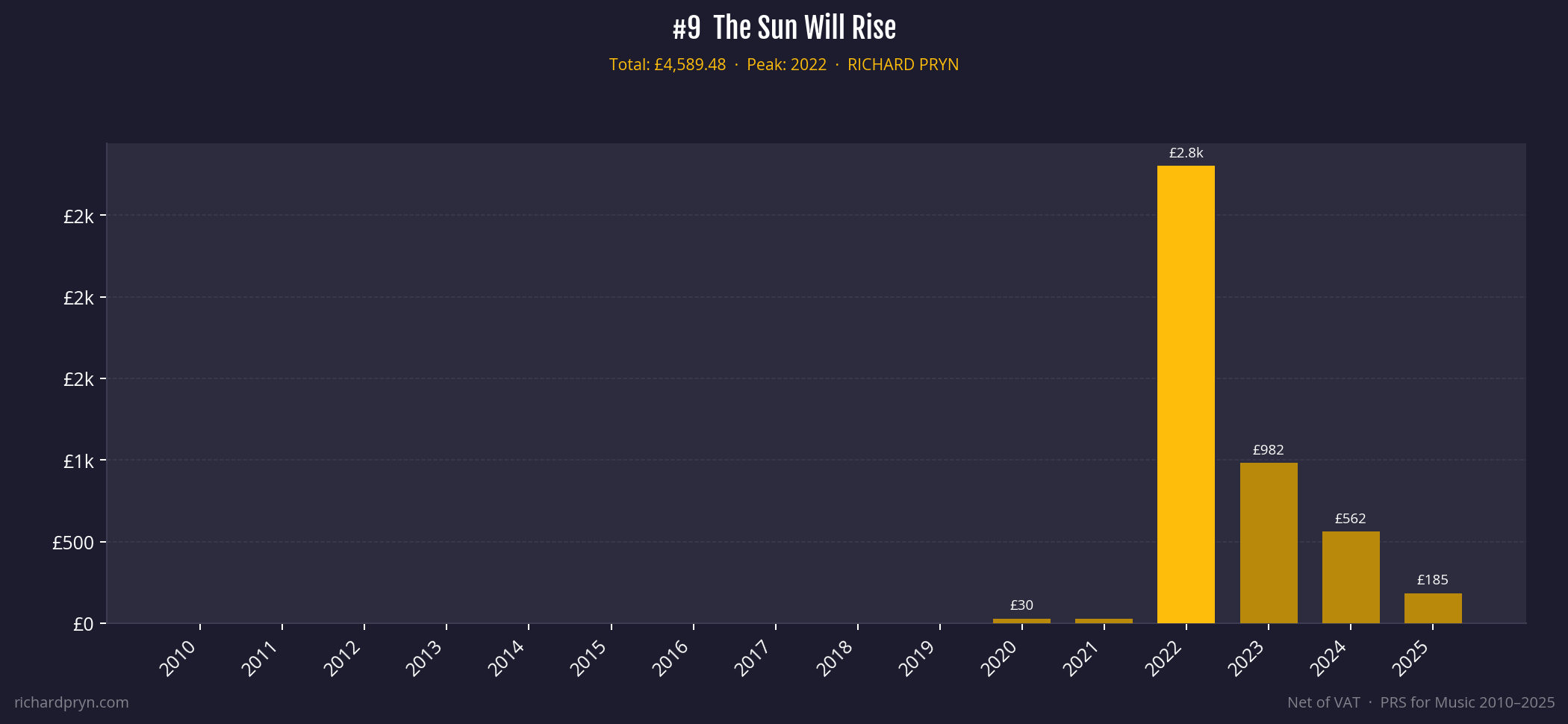
But the story for you here is that 97% of the royalty earnings are from Italy, a country that had no strategic significance when I wrote it.
This is an example of production music reaching countries and audiences you'll never know about.
Until you get your PRO statement 💰
No.10 - Dappled - Library Cue for Hive Music
I really enjoyed writing for Hive Music because they paid recoupable advances.
For context on the earnings chart below, I wrote this in 2017. So I didn't see any money from it for 2 years (beside the advance).
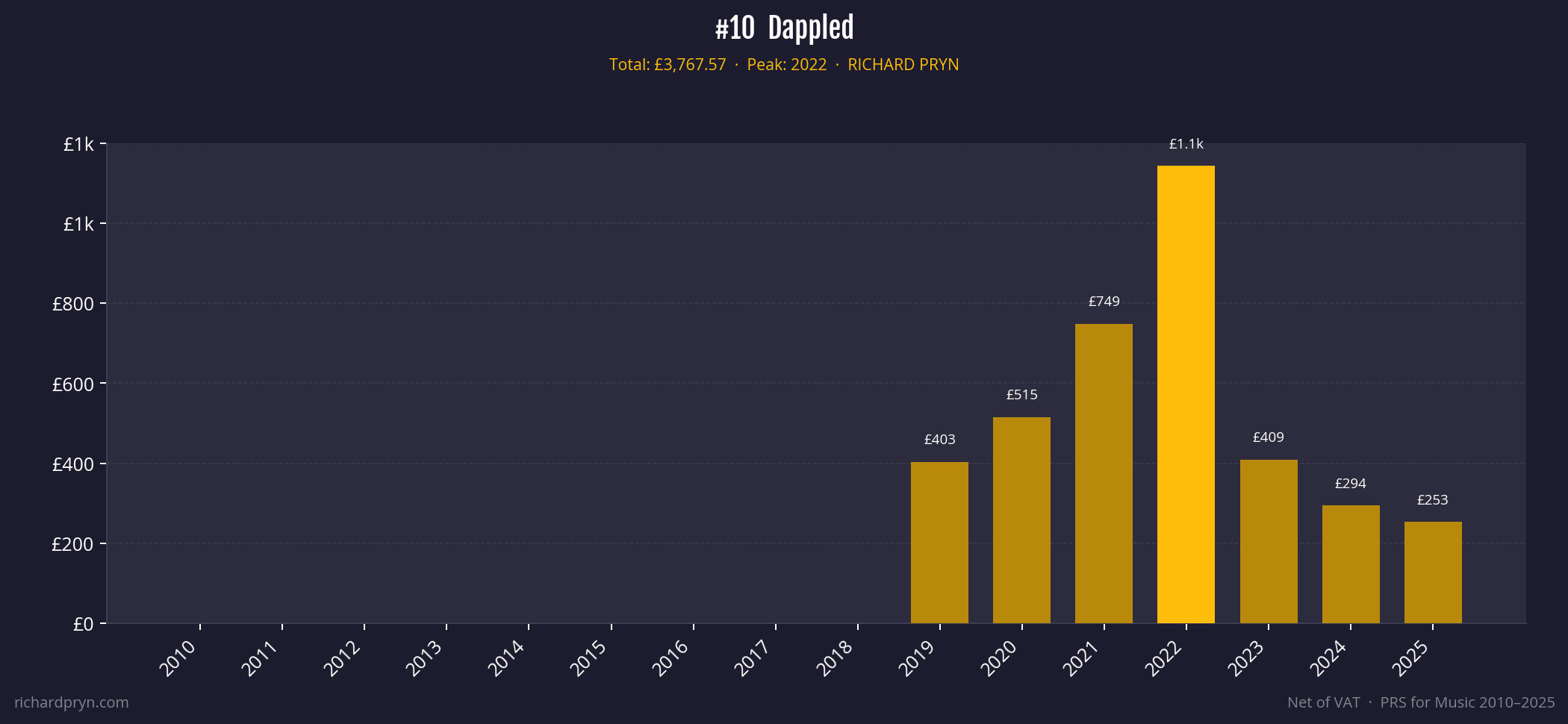
This is very common in production music. The tracks you write for production music libraries probably will not earn you anything for at least 1-2 years. So in those years, it is your job to play that age old "build-your-back-catalogue-whilst-earning-money-from-other-things" malarky.
What those 10 tracks really show us
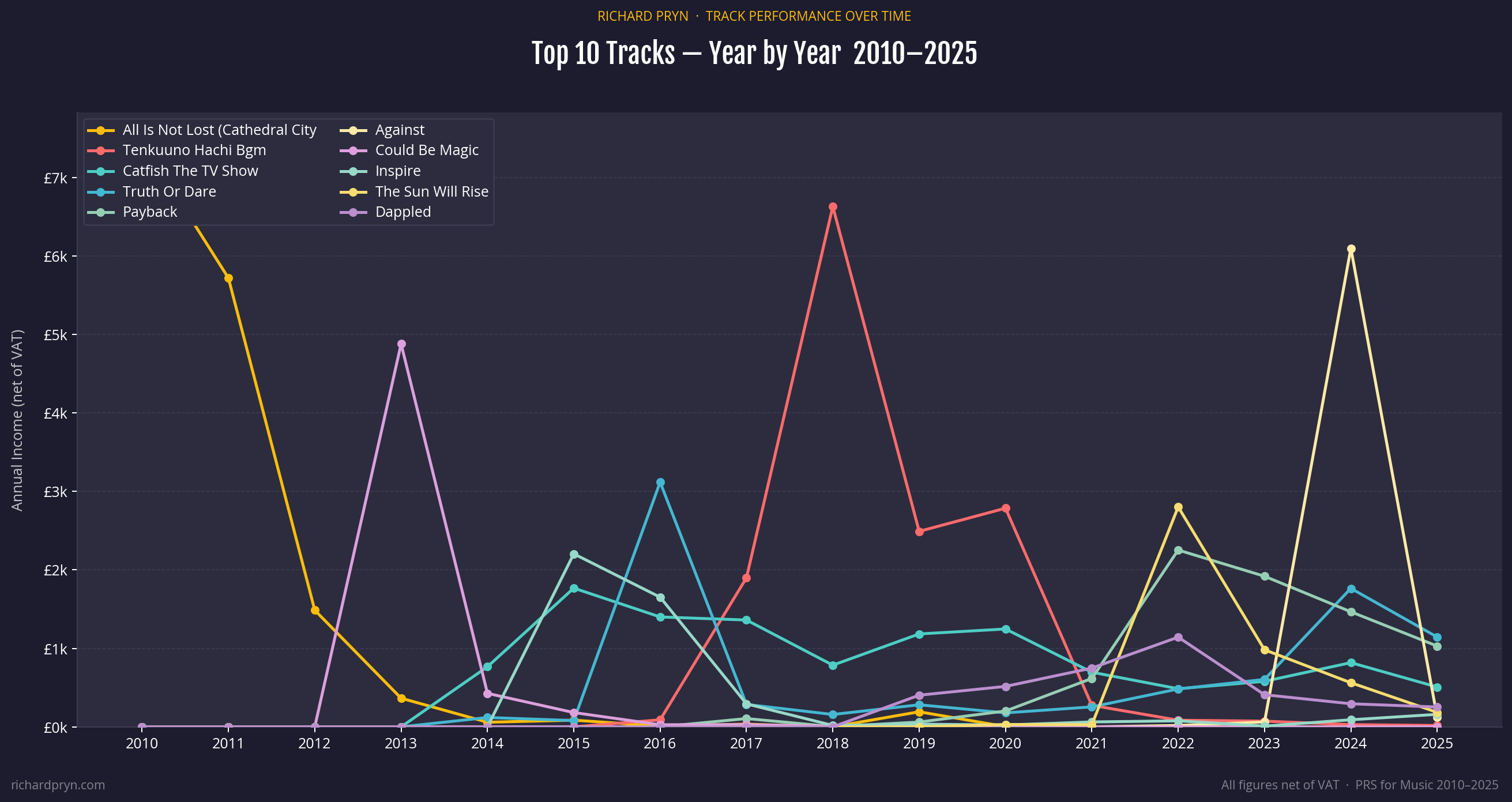
Production music, and writing music for a living is actually not about the individual tracks.
As you can see from the above chart, my income from these was pretty sporadic. But when you compare it to the performance of my whole back catalogue it makes more sense.
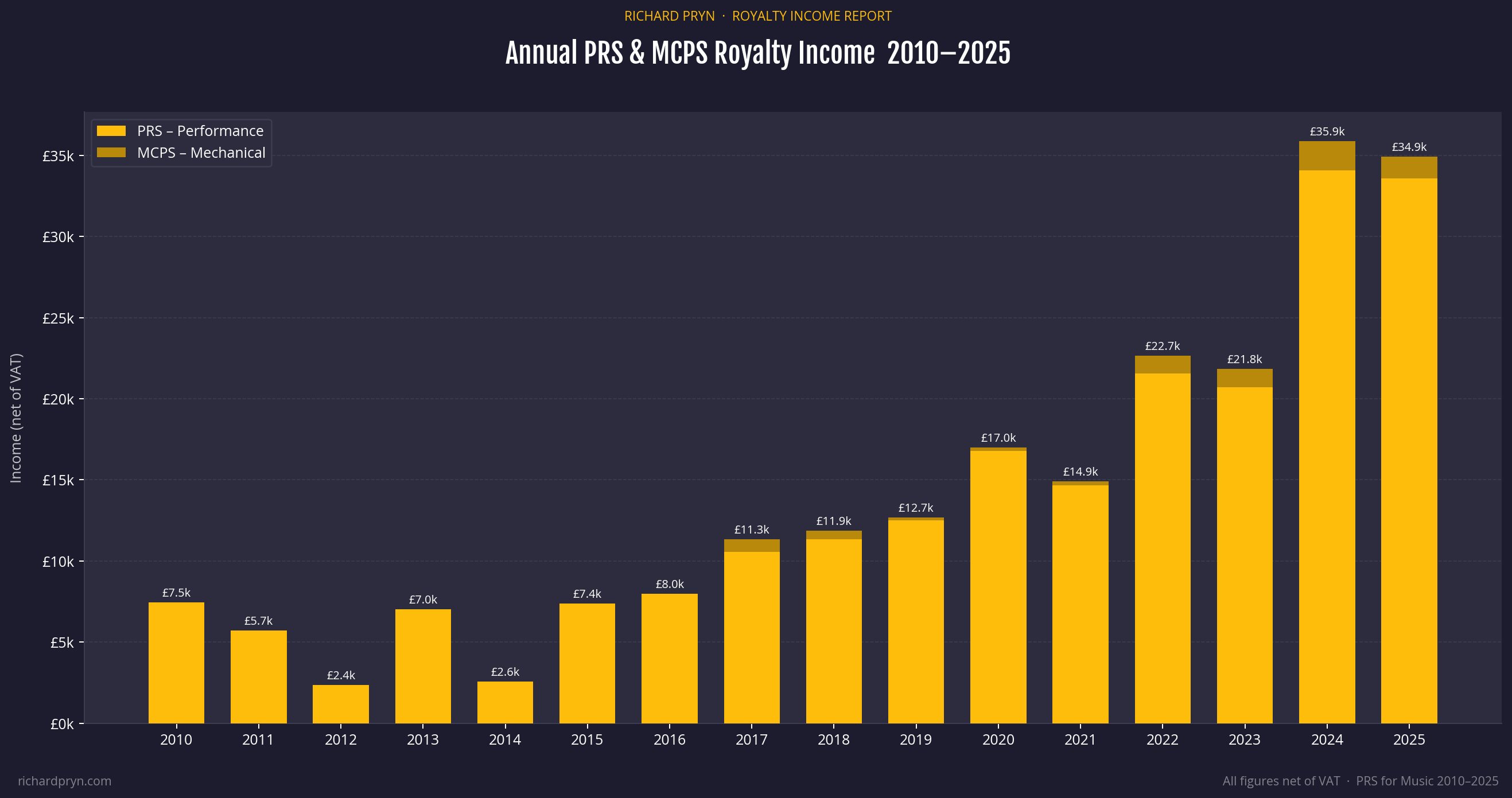
It is as I said earlier, the collection of your tracks, combined with your consistent output, will compound over time to give you a pretty decent salary.
They also show us that it's not just one source of income affecting these numbers; it's library albums, custom advert briefs, overseas placements, film scoring, trailer music cues.
They all earn in more ways than you think.
What changed in 2024-2026
With the arrival of AI, the continued flooding of the market with the ever lowering barrier to entry, and honestly increased competition - so much has changed in the last couple of years.
So what is still working these days?
I am very happy to say. The same thing that always works.
- Nurturing relationships.
- Writing quality music.
- Going from one project to the next.
- Taking care of yourself
Doing those 4 things will mean you will be able to build a catalogue of music, a network of contacts, and enjoy yourself while you are doing it.
Don't worry about all that other stuff, there is always scary new developments, it's always getting harder and more competitive.
Don't let that stop you making music you love and turning that into an income.
My Honest Conclusion
There's no passive income here. It's not quick but it's real and buildable if you know what you are doing.
If you want to learn the specific craft behind writing music that libraries actually sign, this is what I teach inside the Composer Academy.


