
A Very British Scandal Trailer Music Walkthrough | Sanctuary by me
In this post I walk you through the Trailer Music I produced that was used in A Very British Scandal. This was a bit of a double win for me as this track was a track that I wrote…
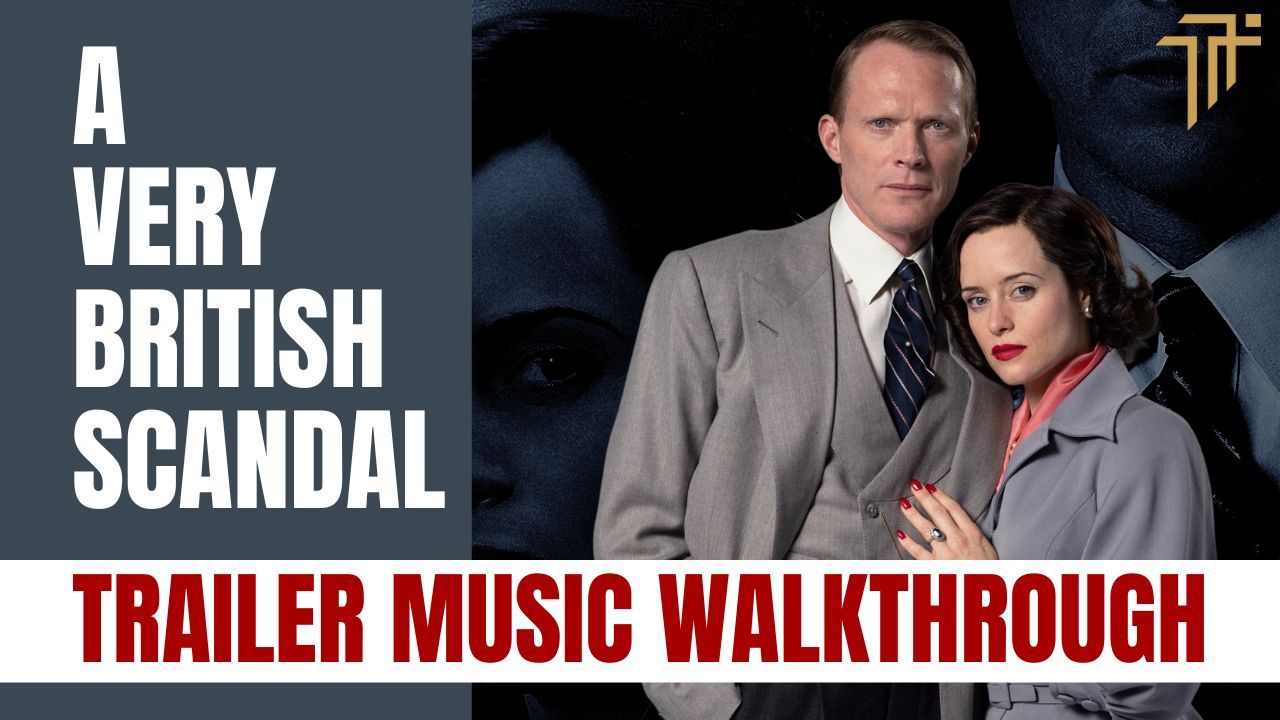
In this post I walk you through the Trailer Music I produced that was used in A Very British Scandal.
This was a bit of a double win for me as this track was a track that I wrote when creating a course on how to write Neoclassical Solo String pieces for my music school.
I’m gonna be totally honest here, I still suffer from bouts of imposter syndrome and fears of it all falling apart (ie not winning any more trailers and everyone finding out that I am a fraud).
Not easy to admit but feels pretty good and hopefully helps you realise that that stuff doesn’t just go away.
So, winning this trailer with this track was the proof in the pudding that I needed to remind me that the stuff I am teaching is relevant and useful still.
This after all is one of the purposes for Protege’s existence; to teach people how to write in many different styles and to make each track ready for sync (sale).
I hope you get a lot out of this walkthrough, I always really enjoy doing them.
How I wrote Sanctuary
The brief for the album was music for Oscar-type films and period dramas, and I wrote the whole track on the piano first. I set out the chord sequence I was going to use, and that was it. Everything else grew from those chords.
Act 1 is about setting the tone. When I was learning solo violin pieces, a lot of them, chaconnes in particular, opened with slow arpeggios, so that’s what I did. The arpeggios simply state the chord sequence. Around them I added ambience from my own ambient piano and a sub bass. The second time round I change the fourth chord, which is a simple way to turn a four-chord sequence into an eight-chord one. Pizzicato brings in some pace, and the swish hit is just a big taiko with the top and bottom rolled off in the EQ, sent into a big plate reverb so it sounds distant.
Act 2 builds the drama, tension and pace. I switch from 4/4 to a triplet feel in 12/8, bring in one of my favourite pace makers, clocks and sticks, and swap the swish hits for bigger hits. I’m not writing anything new here. I’m just rephrasing the old material.
Act 3 is about letting the track soar. It’s the same chord sequence with a bass driving underneath, a shimmering pad for a sense of space, and a top line that reaches up to the extremes of the violin’s range. Start small, close and low, then expand in pitch and volume as the track grows. That’s pretty much trailer writing.
The whole cue is only a handful of stems: the violins, pads, bass, percussion and the trailer hits. It’s a good exercise to ask how you can write minimally and still get a maximal effect.
If you write in this style, find decent players. There were a couple of small tuning wobbles in the recording, but I kept them because they sound more human. When you write on a keyboard, it’s easy to forget the physicality of playing, so keep the player in mind.
For more on string writing, TMCP 039 Emotional String Writing Made Easy looks at modulation and expression on sampled strings, and What is ‘Imposter Syndrome’ and how can you deal with it? picks up the imposter syndrome side of this post. My Neoclassical Strings course goes through writing, recording and producing solo string tracks step by step.
Happy composing!Rich
Read next
- The honest truth about production music income in 2026 (with real numbers from my career)
Everyone talks about passive income from music. Almost nobody shows you the actual numbers.
- The YouTube Strategy That Built 700K Subscribers: How One Composer Turned Belief Into Income
Composer Greg Dombrowski reveals how he built a thriving YouTube career without relying on trends, algorithms, or optimisation hacks, just one track a week and an unwavering belief in his craft.
- The Custom Music Survival Guide: How to Beat Burnout, Time Zones, and Unfair Deadlines
I had to work all night to meet LA deadlines while juggling a day job, leading straight to burnout; here is how I learned to survive the time zone trap, set boundaries with production houses, and make custom music work on my terms.
- Composing the Enchanting Soundtrack for Pete's Dragon Trailer
Learn my approach to writing uplifting family adventure trailer music through my track "The Sun Will Rise," which was featured in Pete's Dragon and showcases the power of simple hooks, cohesive progressions, and magical orchestration.